It most likely comes from the pseudonym of one of the numerous villages’ owners in the mid 15th century – Jan Włoch. This pseudonym could either refer to the country of Italy or could signify the man’s hairy appearance (pol. włochy – colloq. thick, long hairs).
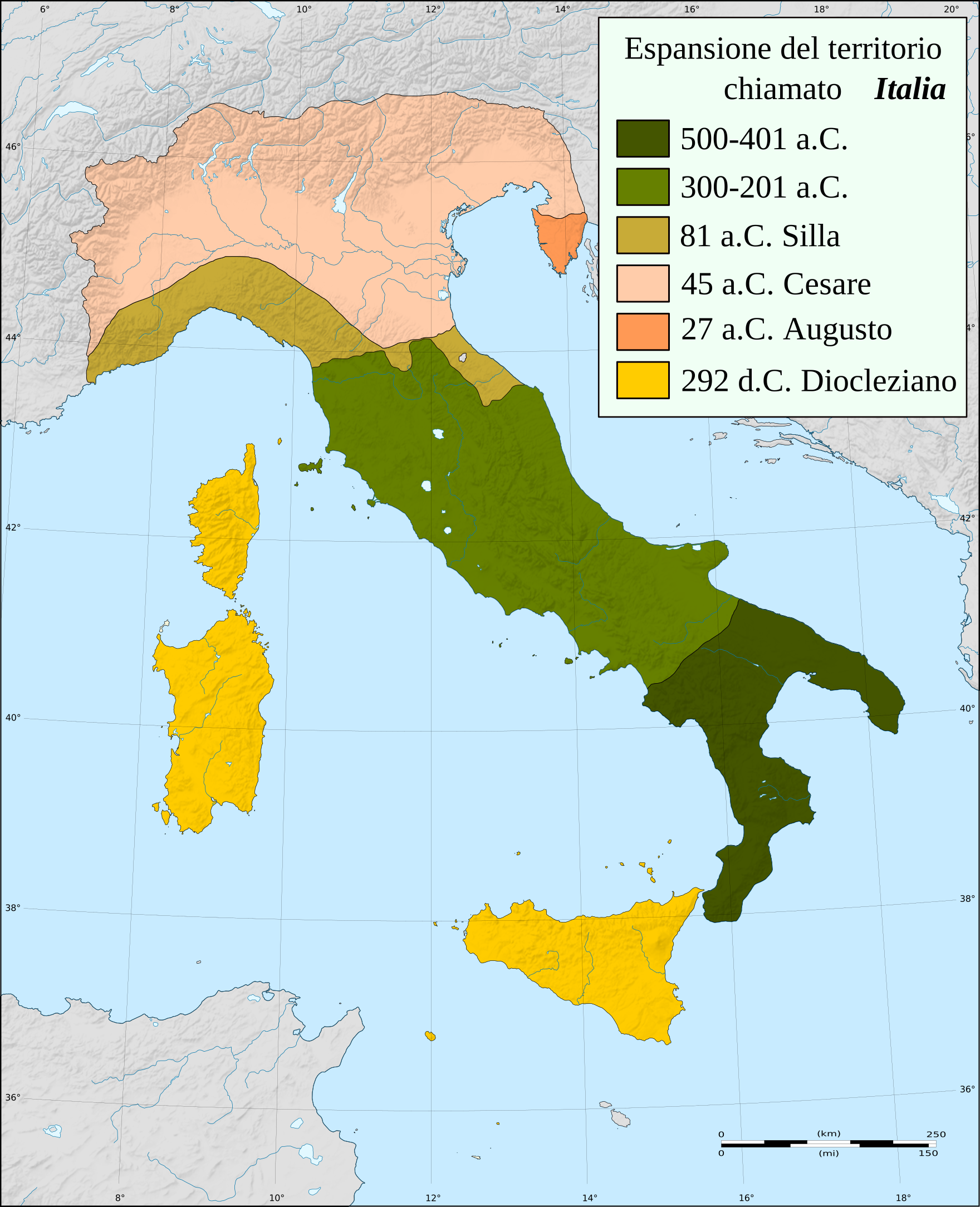
While back in Roman times – both Republican and Imperial ones – the peninsula as a whole was effectively reffered to as Italia, much like it is called in modern Italian, already during the closing decades of the Western Roman Empire , “regionalization” of the political entities of continental Italy was taking place …
According to the most widely accepted explanation, Latin Italia may derive from Oscan víteliú, meaning “[land] of young cattle” (cf. Latin vitulus “calf”, Umbrian vitlu), via ancient Greek transmission (evidenced in the loss of initial digamma).
In Polish, the word, or actually one of its variants, namely Wołochy, was at first used to refer to the Romanised tribes of the Balkans (compare Vallachia). It was only later that the name, now as Włochy, was transferred to another, more Southern people, namely the Italians.
від лат. Italia, було запозичено через грецьку мову від оскського слова Víteliú, що означає «земля молодого теляти». Древньогрецький історик Діонісій …
Назва Італія походить від слова “italia”, що означає «телячі землі», можливо, тому, що бик був символом південних італійських племен.
Італію називають приблизно «Італією» приблизно 3000 років. Стародавній Рим зв півострів і прилеглі острови Італія. Спочатку це стосувалося лише …
Походження слова Italia достеменно невідоме. Згідно з найпоширенішою точкою зору, термін прийшов із Греції і означає “країна телят” .