USB-C Transfers Data Much Faster Than Lightning A big performance difference between the two connectors is how fast they move data. Both can transfer files between devices.
No, USB-C and Lightning are not the same; USB-C is a universal standard for many devices, while Lightning is an Apple-proprietary connector primarily used for their iPhones and some iPads. Key differences include USB-C’s faster data transfer speeds, higher power capabilities, and universal compatibility, compared to Lightning’s exclusive use within the Apple ecosystem and slower speeds. Key Differences
- Purpose and Origin:
- USB-C: A modern, universal standard for USB (Universal Serial Bus) connectors, developed by a consortium of companies.
- Lightning: A proprietary connector invented by Apple for its products.
- Compatibility:
- USB-C: Found on a wide range of devices, including Android phones, laptops, tablets, and increasingly, Apple products.
- Lightning: Limited to Apple’s ecosystem, such as iPhones, some iPads, and certain accessories like AirPods and Magic accessories.
- Performance:
- USB-C: Offers significantly faster data transfer speeds (up to 40Gbps with USB4) and higher power delivery for charging devices.
- Lightning: Has slower data transfer speeds, comparable to USB 2.0 (480Mbps).
- Design:
- USB-C: Larger, robust, and reversible, meaning it can be plugged in either way.
- Lightning: Smaller, symmetrical, and reversible, though it has exposed pins that can be prone to damage or debris.
- Durability:
- USB-C: Generally considered more durable, with a connector designed for more insertion cycles and a more robust physical build.
- Lightning: More prone to wear and tear over time, with reported issues of cables fraying or ports becoming loose.
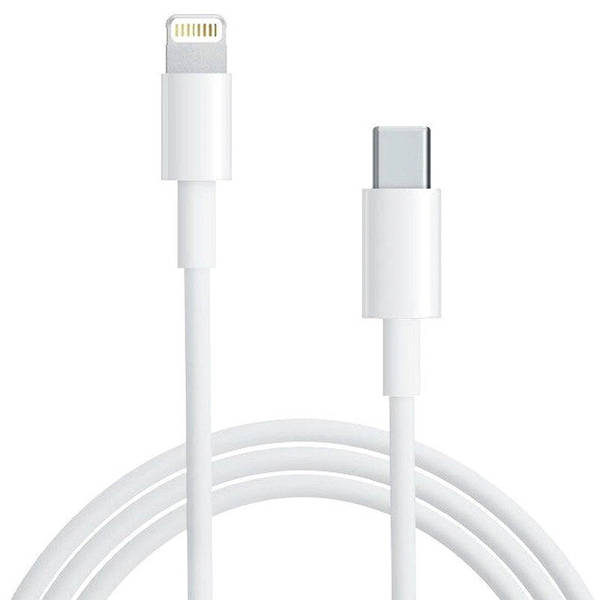
Are they compatible? No, you cannot directly plug a USB-C cable into a Lightning port or vice versa, as they are physically different connectors. However, a special “USB-C to Lightning” cable is available that allows you to connect Apple devices with a Lightning port to a power source or computer that uses a USB-C port.
With a USB-C to Lightning cable, you can charge and sync your AirPods, AirPods Pro, iPhone, iPad, or iPod touch, charge a Siri Remote, and more.
No, you cannot plug a USB-C connector directly into a Lightning port because they are different physical connector types and are not compatible. To connect devices with these different ports, you must use a specific cable (a USB-C to Lightning cable) or an adapter (a USB-C to Lightning adapter), depending on which device has the USB-C port and which has the Lightning port. Using a USB-C to Lightning Cable
- For newer devices with USB-C: You can plug a USB-C to Lightning cable into the USB-C port of a computer, power adapter, or another device to connect to and charge a Lightning-port iPhone or iPad.
- For newer iPhones with Lightning: In this case, a USB-C to Lightning Cable is used to connect a USB-C device to a Lightning accessory, or for data transfer and charging a Lightning device.
Using an Adapter
- Connect a USB-C device to a Lightning cable: You can use a USB-C to Lightning adapter to connect a Lightning cable to a USB-C-enabled iPhone or iPad.
- Connecting to CarPlay: Some vehicles with USB-C ports can use the USB-C to Lightning Adapter for wired CarPlay connections.
Передача енергії – тут теж лідирує USB-C. Він може передавати до 240 Вт, а його конкурент Lightning лише 20 Вт. Саме за допомогою USB-C реалізована швидка зарядка, плюс з його допомогою заряджаються ноутбуки та інші потужніші девайси.13 лют. 2024 р.
У той час як Lightning підтримує максимальний струм 2,4 А, USB Type-C передає 3 А з можливістю підтримки до 5 А. Ця відмінність робить USB Type- …
Швидкість та потужністьUSB Type-C зберіг компактність і набув округленої форми. Його швидкість роботи під час використання USB версії 3.2 може досягати 20 Гбіт/ …
Lightning-Type-C – ці два інтерфейси мають важливу відмінність у технічних параметрах. Lightning – це нестандартний стандарт, створений Apple. …